


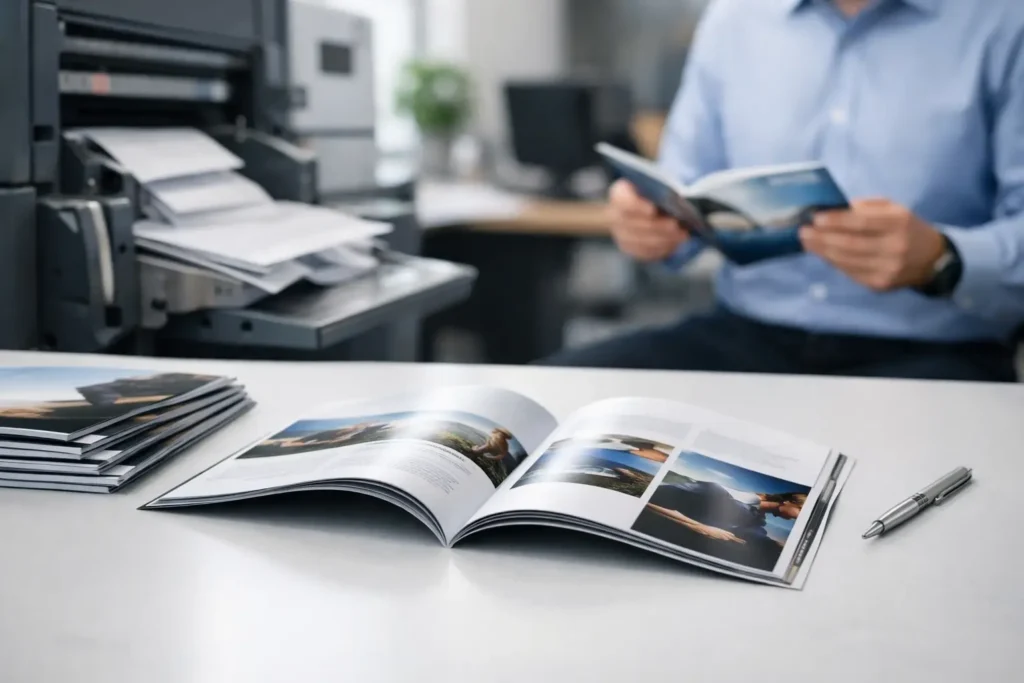
Booklet Printing for Businesses That Works
A rushed handout can get tossed in seconds. A well-made booklet sticks around – on desks, in waiting rooms, in sales meetings, and in customers’ hands long after the conversation ends. That is why booklet printing for businesses still matters, especially when you need something more substantial than a flyer but more flexible than a full catalog.
For many companies, a booklet is one of the hardest-working pieces in the print mix. It can explain services, introduce a product line, support a sales team, welcome new clients, train staff, or guide event attendees. When it is designed and printed well, it does more than share information. It gives your brand weight.
Why booklet printing for businesses still delivers
Digital marketing moves fast, but print has a staying power that screens do not. A booklet gives people time to engage at their own pace. They can flip through it during a meeting, save it for later, mark pages, or pass it to someone else. That kind of interaction is hard to replicate with a link in an inbox.
Booklets also help businesses organize a bigger story. A postcard is great for a quick message. A brochure can cover the basics. But when you need room for pricing, service breakdowns, testimonials, product specs, photos, or step-by-step information, a booklet gives you structure without feeling overwhelming.
That matters for businesses that need to look polished and prepared. If you are presenting to clients, displaying materials at a trade show, onboarding customers, or equipping a sales rep, a booklet shows that you took the time to put your information in order. It tells people you are serious.
What makes a business booklet effective
A strong booklet starts with a clear job. Some are built to sell. Some are meant to educate. Some support operations behind the scenes. The biggest mistake is trying to make one booklet do everything at once.
If your goal is lead generation, the content should move quickly and focus on benefits, proof, and next steps. If the booklet is for internal use, clarity matters more than promotion. If it is for a product showcase, photography, layout, and paper choice carry more weight.
The best booklets also respect the reader’s time. That means clean hierarchy, readable type, enough white space, and a page count that fits the message. More pages are not always better. A tight 8-page or 12-page booklet can outperform a bloated 24-page version if the content is easier to navigate.
Common uses for business booklets
Booklets work across industries because they adapt well. Service businesses use them to explain packages, processes, and case studies. Retail and product-based brands use them for lookbooks, seasonal launches, and wholesale presentations. Healthcare providers, schools, nonprofits, and local organizations often use them for informational guides and program materials.
Event marketers rely on them for schedules, sponsor features, maps, and attendee resources. Real estate teams use them for property packages and neighborhood overviews. Contractors, manufacturers, and professional service firms use them to make technical information more approachable.
That flexibility is part of the appeal. One format can support marketing, sales, and operations without feeling generic.
Choosing the right format for booklet printing for businesses
The right booklet format depends on how it will be used, how long it needs to last, and what kind of impression you want it to make. Saddle-stitched booklets are a popular choice for shorter runs and lighter page counts. They are cost-effective, easy to handle, and ideal for marketing pieces, event programs, and company overviews.
Perfect-bound booklets feel more substantial and polished, which makes them a better fit for thicker product catalogs, annual reports, and premium brand presentations. If durability matters, coil or wire binding may make more sense for training manuals, reference guides, or materials that need to lie flat.
Size matters too. A standard letter-size booklet gives you room for visuals and detail, while a smaller format can feel more curated and easier to carry. There is no single best option. It depends on your audience, your budget, and how the booklet will function once it is printed.
Paper, finish, and print quality matter more than most people expect
People notice print quality right away, even if they do not say it out loud. Thin paper, muddy colors, weak binding, or blurry images can make a business look less established than it really is. On the other hand, a booklet with crisp printing, strong color, and the right stock instantly feels more trustworthy.
Gloss paper can make photos pop, which is useful for product-heavy layouts. Matte or uncoated stock can feel more refined and easier to read, especially for text-heavy content. Heavier covers add durability and give the booklet a more finished presentation. The inside stock should support the reading experience without making the piece bulky or expensive.
This is where trade-offs come in. Premium materials create a stronger impression, but they also affect budget and shipping weight. If you are handing out hundreds at an event, a lighter stock may be the smarter choice. If you are leaving a booklet behind after a high-value sales meeting, spending more on presentation can be worth it.
Design choices that help your booklet perform
A business booklet should look branded, but it also needs to be usable. That means strong cover design, consistent fonts, clear section breaks, and visuals that support the message instead of competing with it. Good layout keeps the reader moving naturally from page to page.
The cover matters more than many businesses think. It should clearly signal what the booklet is about and who it is for. Inside, each spread should have a purpose. Dense text blocks, tiny type, and cluttered pages make readers tune out fast.
It also helps to think practically. Will this be mailed? Displayed in a lobby? Used by a salesperson during presentations? Shared at an expo? Those real-world details affect design decisions, from cover coating to page count to whether the booklet needs room for notes or write-ins.
Why local support can make the process easier
Booklet projects often involve more moving parts than expected. You may need layout help, file adjustments, paper guidance, color matching, binding recommendations, or a quick turnaround before an event. That is where working with a local print partner can save time and stress.
Instead of uploading files and hoping for the best, you can ask questions, review options, and get advice based on your actual goals. That matters when timing is tight or the booklet plays a visible role in your brand presentation. Personal support also helps catch small issues before they turn into expensive reprints.
For San Diego businesses, working with a team like Ego id Media can simplify the process from concept through production. When design assistance, print execution, and branded materials all live under one roof, it is easier to keep quality consistent and keep projects moving.
How to get better results from your next booklet order
Start with the purpose, not the format. Know what the booklet needs to do and who needs to read it. From there, page count, binding, stock, and finish become easier decisions.
It also helps to prepare your content early. Final copy, approved images, and a clear brand direction reduce delays and prevent last-minute compromises. If your team is still shaping the message, say that upfront. A good printer would rather help you plan the project correctly than rush a file that is not ready.
Be realistic about quantity as well. Short runs work well for testing a new offer, updating pricing often, or supporting smaller events. Larger runs can lower unit cost, but only if the content will stay relevant long enough to justify the volume. If your information changes every few months, overordering can waste money.
Finally, do not treat the booklet as a standalone piece. Think about how it fits with your broader materials. It should align with your business cards, presentation folders, signage, postcards, and other branded assets so everything feels connected when customers encounter your brand in different places.
A well-printed booklet does not need to be flashy to be effective. It needs to be clear, credible, and built for the job. When your materials feel thoughtful in people’s hands, your business feels easier to trust.
Leave a reply

Leave a reply